Charles Jensen
30 SEPTEMBER 2011
THE FIGURE 5
Among the rain
and lights
I saw the figure 5
in gold
on a red
fire truck
moving
tense
unheeded
to gong clangs
siren howls
and wheels rumbling
through the dark city
—William Carlos Williams, "The Great Figure"
Today marks the fifth birthday of LOCUSPOINT, launched in these pages with the appearance of editions from Boston (edited by Christopher Hennessy), Seattle (edited by Rebecca Loudon), and St Louis (edited by Julie Dill).
While I never set out on this journey to hit milestones, I feel proud to have encountered one, a small one. I'm inclined to stop and measure how the world has changed around us since LOCUSPOINT arrived, but you already know that drill. You've been here; you've been watching.
In five years, I've lived in three cities. Three vastly different poetry communities where I had the opportunity to meet and get to know some wonderfully talented writers, poets of purpose, poets who are on the ground making things happen where they live.
This, about our world, has not changed.
The poets who've participated in LOCUSPOINT have spent the last five years well. Our editors have stayed and tended to their cities or moved on to new places. Our contributors have published books, received recognition with awards—and they, too, have stayed put or moved on.
While LOCUSPOINT thrives on the generous contributions of time, effort, and consideration gifted by the editors, I've found it difficult at times to press on in the managerial capacity. Life gets in the way of art—another familiar observation, I'm sure.
But I return, again and again, to working on LOCUSPOINT. I love this magazine. I love these editors. I'm thrilled by the poets who share their work with us. I believe, still, this unique approach to publishing matters. And while life can pull me away, it can't pull me away forever.
Don't let your life get in the way of poetry. It is we who must get out of the way of poetry.
Please join me in celebrating these five years by revisiting our cities past. I sincerely thank the volunteer editors who have made this magazine possible, and who make it what it is:
Sandra Beasley (Washington, DC)
Brent Calderwood (San Francisco)
Julie Dill (St Louis)
Jim Elledge (Atlanta)
Suzanne Frischkorn (New Haven)
Brent Goodman (Madison)
Joseph Harrington (Lawrence)
Christopher Hennessy (Boston)
Francesco Levato (Chicago)
Rebecca Loudon (Seattle)
Shin Yu Pai (Dallas)
Dawn Potter (Maine)
Sean Singer (New York City)
Sarah Vap (Olympia)And John Sparrow, who took my rudimentary design and made it pretty and easy to use!
Best regards,
Charles Jensen
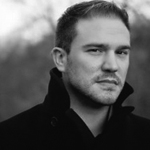 is the author of The First Risk (Lethe Press, 2009), which was a finalist for a Lambda Literary Award; The Strange Case of Maribel Dixon (New Michigan Press); and Living Things, which won the 2006 Frank O'Hara Chapbook Award. His poems have appeared in Bloom, Columbia Poetry Review, Court Green, FIELD, The Journal, New England Review, and Prairie Schooner. He serves on the Emerging Leader Council of Americans for the Arts and maintains a blog on culture, cinema, and poetry at kinemapoetics.